More than a policy checkpoint
Real deployment connected teleoperation, multi-view demonstrations, data preparation, inference, communication and physical execution.
Robotics · Perception · Embodied AI
I build robot learning and perception systems for real-world deployment.
MRes Medical Robotics, Imperial College London
Embodied AI / Robot Learning Intern, Latencore AI
Selected work · Robot learning
Deploying and debugging a vision-language-action policy on two AgileX PiPER arms.
Real deployment connected teleoperation, multi-view demonstrations, data preparation, inference, communication and physical execution.
I worked across demonstration capture, end-effector trajectory preparation, LeRobot-compatible data, policy deployment and system-level debugging.
I traced calibration, camera-stream, robot-communication, inference and action-handoff issues on the physical platform.
Data collection
PIKA capture combined two wrist cameras with an external panoramic view. I also integrated and operated a colleague-provided 3D-printed UMI setup using VIVE trackers and four Lighthouse base stations.
Contribution boundary. My work focused on integration, data workflows, deployment and debugging; the underlying robot controller and UMI hardware were developed by others.
Selected work · Individual research
Imperial College London · Hamlyn Centre
Supervised by Dr Stamatia (Matina) Giannarou
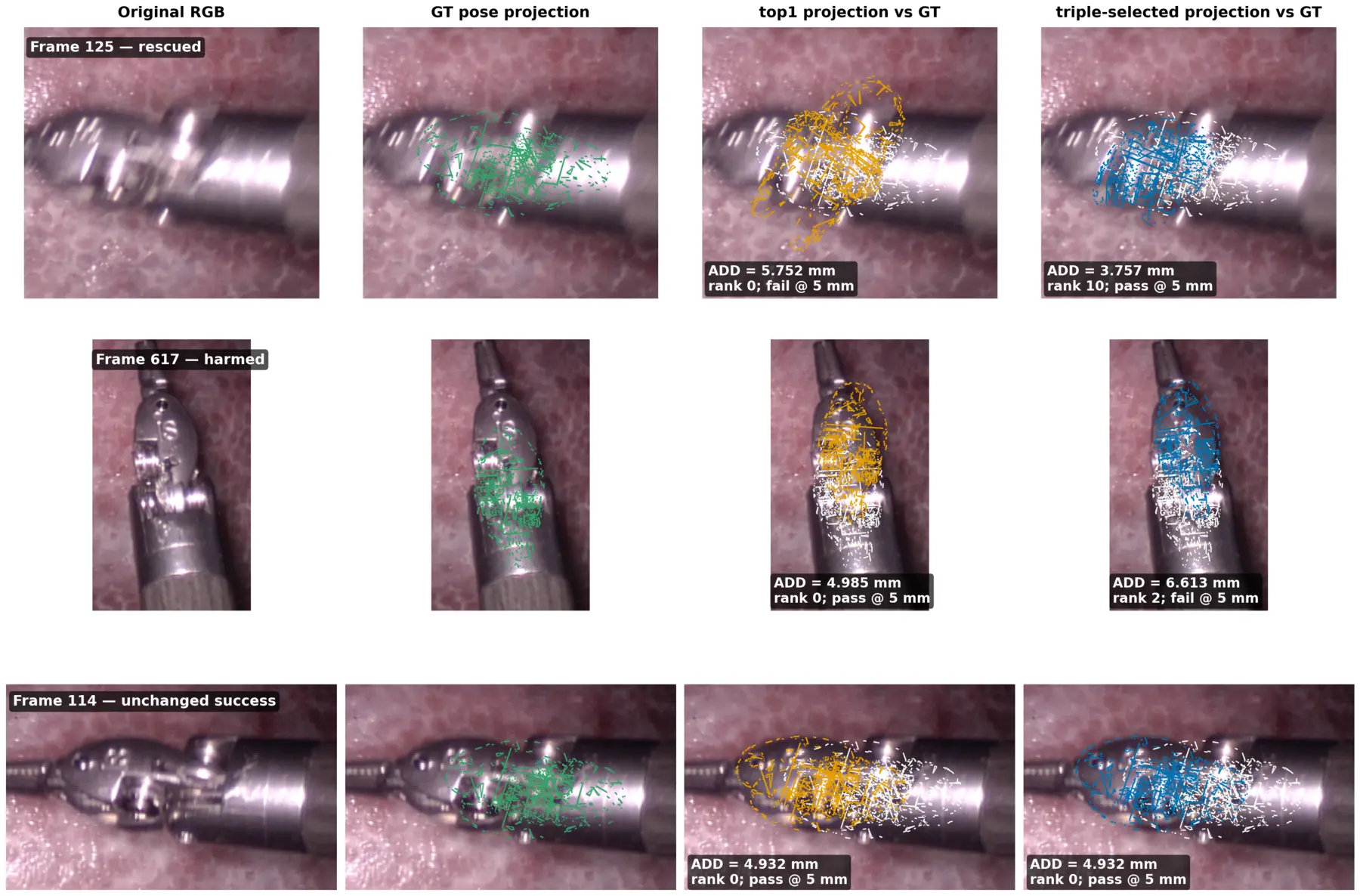
Foundation-model candidates can appear plausible while the default top-ranked pose remains geometrically inconsistent for a symmetric surgical instrument.
after symmetry-aware geometric candidate reranking
Approach
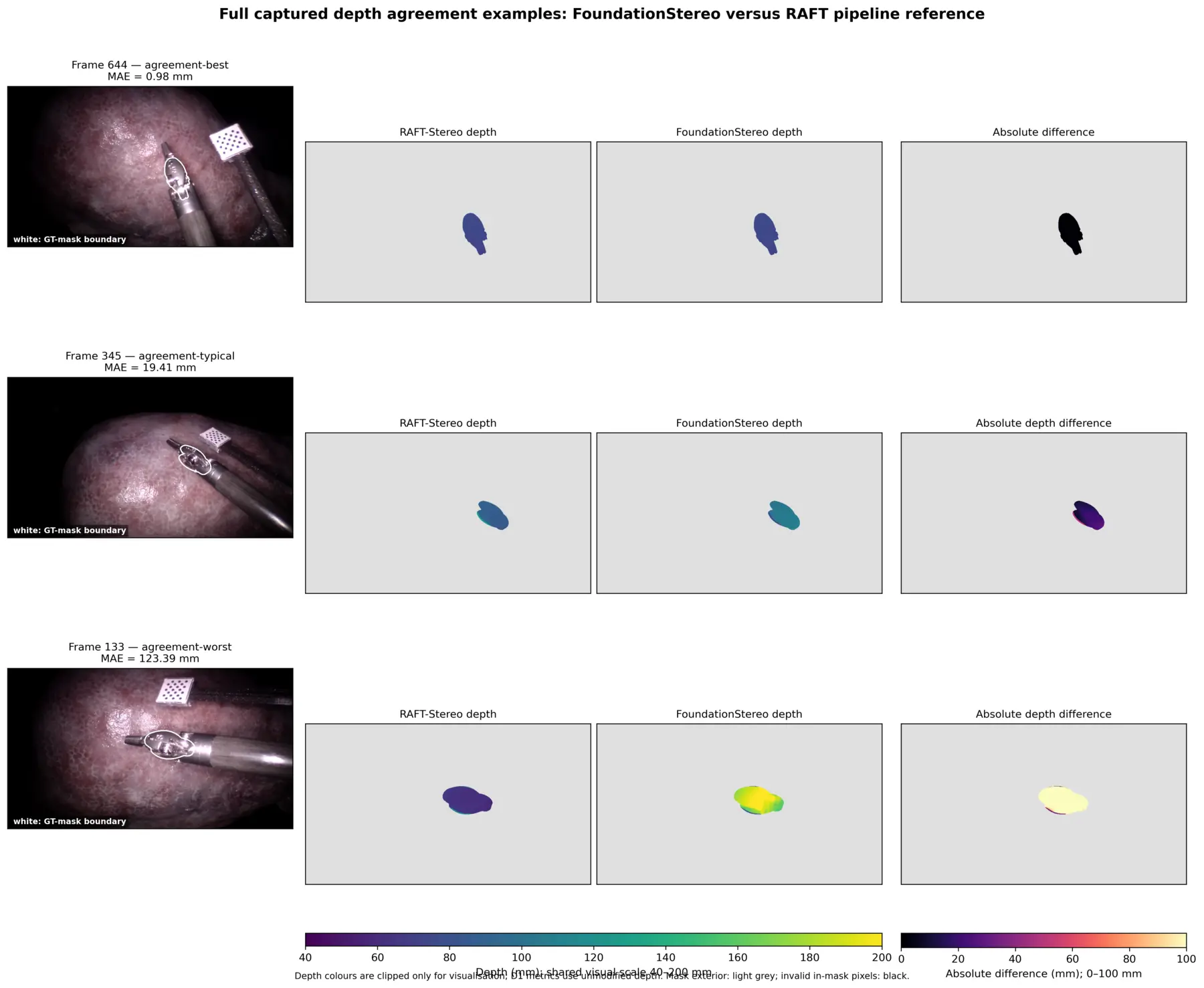
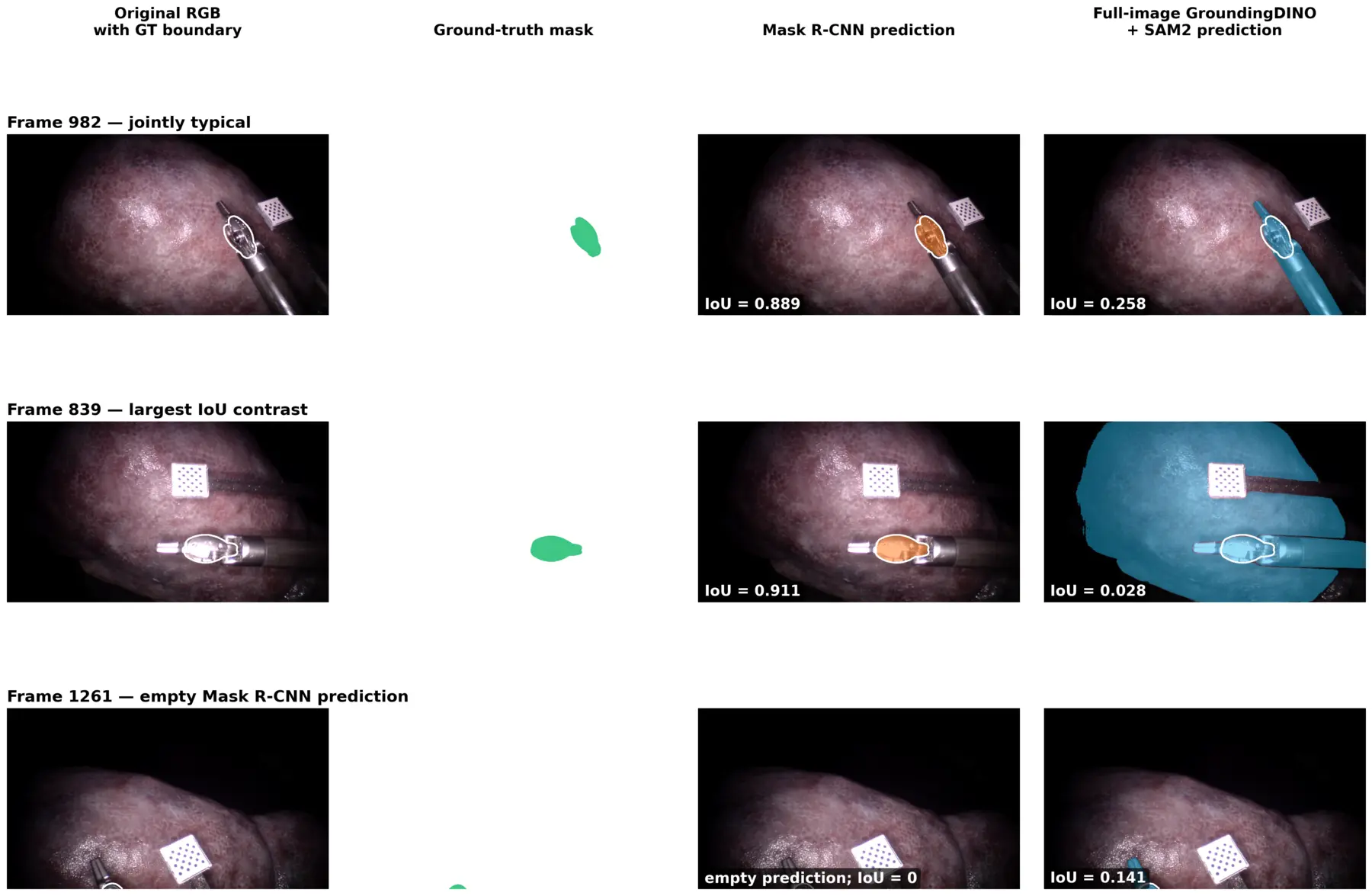
Segmentation and stereo depth feed Any6D candidate generation. CAD geometry and object symmetry then provide interpretable constraints for reranking.
Selected systems
A LangGraph workflow over MIMIC-IV that plans, generates and validates SQL, repairs failed queries, and abstains when a safe answer cannot be produced.
My contribution Designed the Planner Agent’s stepwise logic and integrated LangGraph state, nodes, transitions and failure-case testing.
A complete interaction loop combining speech input, structured game-state parsing, an LLM/API response, and parallel TTS and Gradio output.
My work: real-time state capture and parsing, structured-state validation, API integration, and controlled synchronisation and responsiveness testing.
About
I work between learning-based robotics and the engineering required to make models run on physical systems. My interests include imitation learning, reinforcement learning, Sim2Real, VLA models, 3D perception and deployment-oriented evaluation.
Robot learning Teleoperation · demonstrations · VLA deployment · physical evaluation
Perception 6-DoF pose · stereo depth · segmentation · CAD geometry
Engineering Python · PyTorch · Linux · Git · hardware/software debugging
Contact